
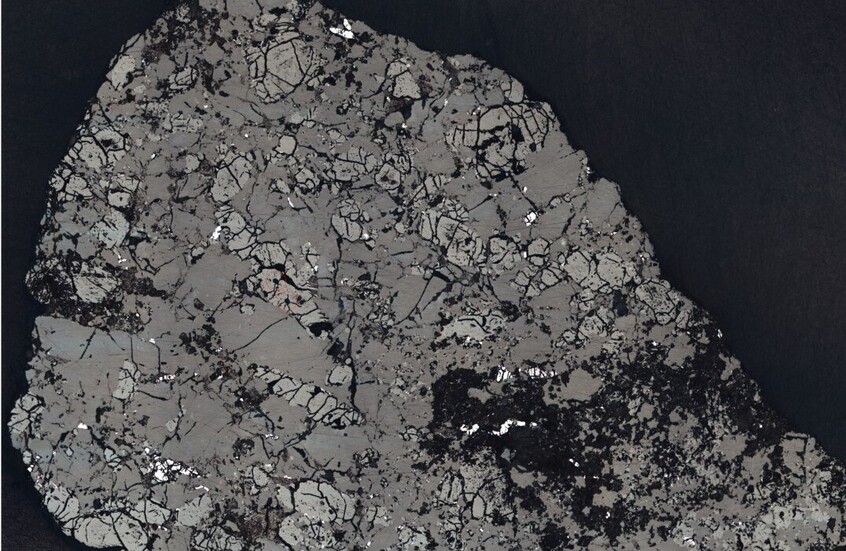
ويعرف النيزك باسم "تيغازا 001" (Teghaza 001)، ويقدم رؤى حول البيئة المريخية في مراحل نشأة الكوكب المبكرة، مع أدلة جديدة تدعم وجود مياه سائلة على سطحه، ما يشير إلى احتمال ملاءمة المريخ للحياة الميكروبية.
ووصف يانغ ليو، عالم الكواكب في مختبر الدفع النفاث التابع لناسا، النيزك بأنه "شاهد على فترة كان فيها المريخ أكثر دفئا ورطوبة".
A new study has detailed one of the oldest Mars meteorites ever found on Earth.
Called Teghaza 001, scientists say this more than 4.1-billion-year-old Mars rock provides a rare snapshot of the planet’s ancient crust and formation. ½ https://t.co/kI5CHCQoDd.
ويدل التركيب الكيميائي للنيزك الذي يعرف بـ"الغابرو" (Gabbro)، يدل على أنه تفاعل مع الماء أثناء تبريده ببطء.
وبينما يعتبر جزءا من القشرة المريخية، تشكل من صهارة نشأت في أعماق الكوكب.
Where did the ancient Martian meteorite Teghaza 001 come from?🪐 Billions of years ago, magma cooled in the southern highlands of Mars.
Then a powerful impact blasted a piece of crust into space.
Millions of years later, that rock fell in the Sahara — and became one of the oldest Martian meteorites ever found on Earth.
Scientists matched the chemical and mineral “fingerprint” of Teghaza 001 with orbital data and identified 13 places on Mars where the rocks look very similar.
تاريخ النشر: 30.10.2026 | 12:20 GMT